Tuesday, June 7, 2016

In The Meadowy

We have ignition. Summer bloom has begun. The first Rose Campion flowers are here.


The variegated Feather Reed Grass is sending up bloom spikes.


Ox-Eye Daisies are sprinkling themselves about.


Repetition of form keeps things interesting while we wait for the bloom.


One shrub rose blooms with wild kind things.


A Euphorbia by the mailbox.


The roadside vegetable garden's screening along the scenic byway.


And this I believe is Fox Sedge, Carex vulpinoidea. There are far too many sedge species in the Lush to count.


Monday, June 6, 2016

Texture

The early summer bloom is on the way. Lots of plants are budding out. The really big show in the Tall Flower Meadow is late August into September when the late season perennials bloom. That leaves a whole lot of plain green during the time of vegetation. More is needed to keep the garden interesting and carry it through the season.


More can come in the form of plant diversity and earlier bloom times.


More can come in the form of art and blooming trees and shrubs.


But in an ocean of green that leans towards tall perennials with simple, linear to oval leaves, texture is a very good tool to use to bring more interest to the garden. In the shade where bloom is harder to come by, texture is doubly important.

Just adding the different texture of liatris and lychnis into the matrix helps break up the monochromatic leaves of the aster family members that dominate.


Big bold texture is even better. Blooms are not required.


I have made a concerted effort to add more big foliage and texture to the garden and to encourage the natives that fit the description. The results are starting to show.


I suspect this sedge, a carex species most likely, is considered a weed to most. It has thin grass like leaves to about eighteen inches tall and gnarly looking spiny blooms. I like it. What a cool and unusual texture.

A quick search has me thinking it is Carex hystericina, Porcupine Sedge. Hysterical. It came free because I did not weed it out.


The native Goatsbeard, Aruncus dioicus, does double duty in the shade with big foliage of a different texture and a showy bloom. I need more.


When I look out on the rising Tall Flower Meadow it undulates in height and texture. The eye is engaged and pulled into the scene instead of passing over the top of a flat green plain to the far horizon. Texture in the garden does that.


Sunday, June 5, 2016

In The Ridge Top Garden

It was wet and icky when I woke up. The sky did not look in the least bit promising. I watched the radar with my morning coffee and saw my opportunity for mowing the paths next door was closing. They would have to be whacked wet.


Five minutes after I was finished it began to rain. My only option at that point was to brush off the sticky wet bits and take a nap.


Three hours later it stopped. It was late. It was still wet and icky. The sky did not look in the least bit promising. I was not in the mood for another round of editing.


Mowed paths are the miracle workers of the wild cultivated gardens. That touch of order can make so many sins disappear. It calms my maintenance gardener self.


Now mind you the ridge top garden still needs some dedicated editing time. I'll probably spend a few hours during the evenings this week prowling the garden pulling the unwanted.


Bulbarella is still planting new hosta.


It is time to start uncovering the ones she already has.


The ridge top garden is about an acre and a half of woodland shade garden. It isn't hard to edit. The weeds pull easy. The time to cover that amount of ground thoroughly and with an eye towards spiffy is harder to come by.


There is only one of me and one Kousa Dogwood tree by my front porch where I can sit and rest.


I edit for scenes like this. Pretty spiffy isn't it.


Saturday, June 4, 2016

It Is Possible

My morning was spent in the garden on the upcoming tour. It is getting a little extra time and attention to make sure it is spiffy enough for hundreds of lookers. My afternoon was spent editing in the ridge top garden next door. I want it spiffy enough for me.

There is a world of difference in style between the garden on the tour and the wild cultivated gardens. My garden and the sunny utility meadow were well edited this spring. They are looking wildly spiffy. Now I am able to devote a little more time to the ridge top garden. It is just as wild.


The ridge top garden is not my first priority. It actually is pretty much the last. Even so, I have spent countless hours tending that garden over the years and preventing it from going completely out of control. You might say I have even made some progress.


It is possible the ridge top garden is only some motivated editing away from spiffy. The cast of characters over there is very different from my garden, but the same principles of removing the annoying, cleaning around the cultivated and leaving the rest be is the road to spiffy. Mowing the paths is the final touch to make order out of chaos.

Tomorrow after I do that when it doesn't make my hair stand on end I will take some pictures over there. There are times when the ridge top garden can make my maintenance gardener self just a wee bit agitated.

This I can handle, no problem.


It is possible because edited can look like this in the wild cultivated. It is possible because during our strolls this spring I made a concerted and successful effort to remove all the Velcro Weed so it isn't wrapped around and sitting on top of things making the job that much harder.

Is it possible I am close to having three acres of wild cultivated looking spiffy on an annual basis? That would make my maintenance gardener self oh so relaxed and happy. I'd be able to chose a new weed to eliminate.


Friday, June 3, 2016

The Carrion Flower Comes In For A Landing

The lone stem of the Black Iris blooms in the cabin side bed. If that Japanese Maple ever decides to become a tree, the iris and many other things will get shaded out. I can move them when that happens.


The afternoon showers have been coming regularly. I live in a very moist place. You can detect the true deep purple nature of the Black Iris in this picture. It changes with the light.


The roadside vegetable garden has had a rough start this year. I planted the first week of May because it was warm verging on hot and fit my schedule perfectly. Then it got cold. Down to 36 cold with plenty cool mixed in.


When the warm returned, a family of turkeys with a huge brood of chicks came in and scratched the peck out of the whole garden. Dung makes plenty worms.

The next day some damn digging varmint examined the roots of a tomato and pepper plant.

Seeding things is always a problem. Slugs, snails and rolly pollies love them some fresh sprouts. I have found the best solution is a light fertilizer application. The salt like qualities of fertilizer pellets is hard on slime and crustacean bodies. I neglected to do that. My seeding of things has had poor results.


Last year's unharvested parsnips are blooming beautifully.


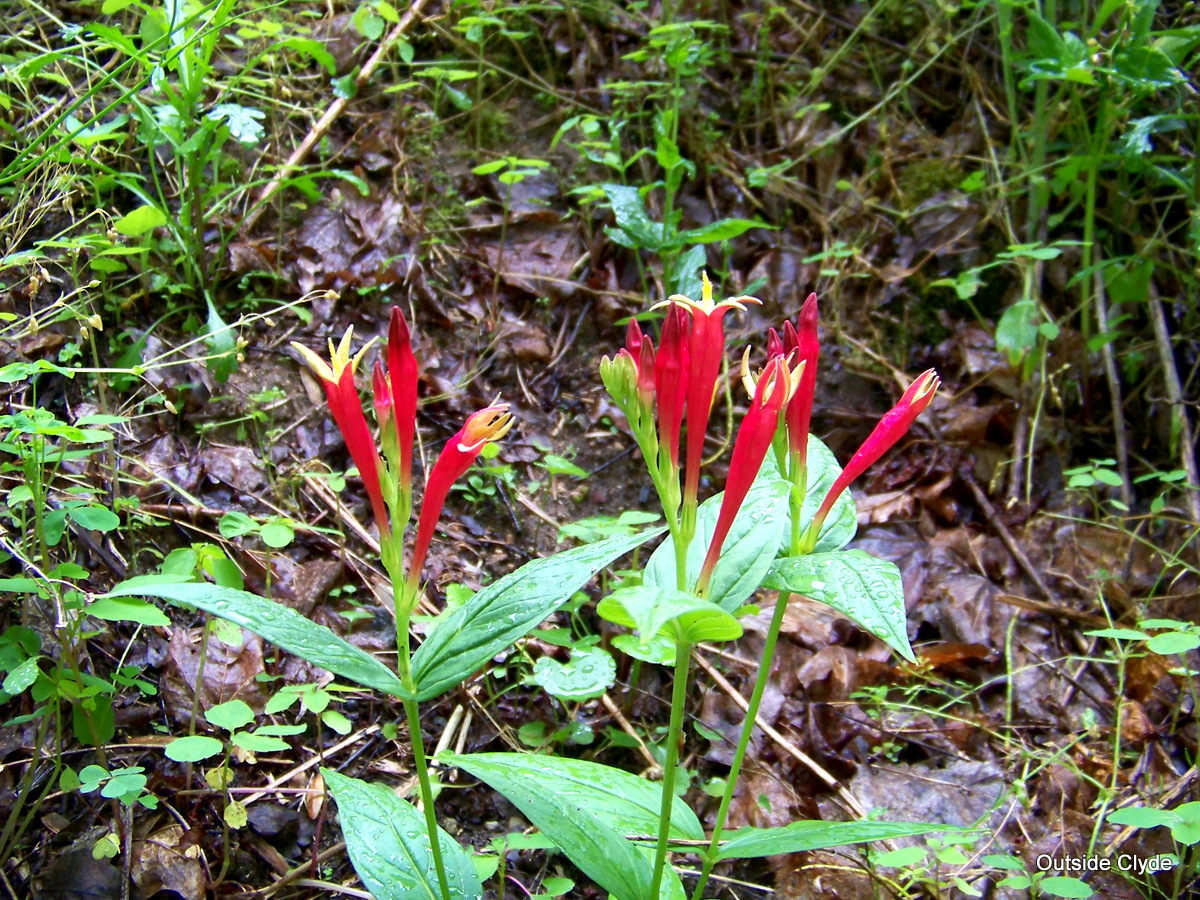
I may have bought a couple more Indian Pink, Spigelia marilandica, because more is good and the ones I have sure are growing slow. The nursery bought ones are way ahead of the already in ground ones. You can see one that has been here for about three years right behind this one.


Three of the Hesperaloe parviflora are ever so slowly sending up a bloom spike. If these live, thrive and grow to full size they could be quite the addition to the gardens. I am concerned it is blooming more as a death wish. Cold, wet and voles have tested their desert nature. The verdict is still out on them.


The Rodgersia is in bloom. You have to love big bold foliage for shady conditions that also has a showy flower.


This is the native Spikenard, Aralia racemosa. I relocated these from a friend's place in Hot Springs. It is another big foliage plant.


It's Asian cousin is Aralia cordata 'Sun King'. The grasshoppers and slugs have really enjoyed these as they were emerging. I'm lucky to have this much of a plant left. They are alleged to get very large. The first one I put in too much shade several years ago. It is not large. The new ones are in more sun.


It comes up like an asparagus spear on steroids. Smilax herbacea, Smooth Carrion Flower, is an herbaceous and thornless smilax vine. The round balls of flowers stink.


It would grow five feet high and fall over because it had nothing to affix its tendrils to and would get lost in the Lush. Now it has the Dragonfly Bomber to rest upon. The better to be seen and sniffed.


Last fall I was handed a box of bulbs and told to plant them somewhere. Where wasn't specified. I was told they were cold hardy crinums.

I know there are some long time, reliably blooming crinums a block away from where I has handed this box of bulbs. I was still skeptical they would be hardy. So I planted them somewhere ... in two places. A couple of bulbs rolled out of the box and followed me home for a high elevation cold hardy experiment.

The smaller bulbs I stuck in the Great Lawn came up. The bigger bulb was a no show. I figured the voles had a fine Christmas dinner.

At work today a Louisiana Iris leapt right out of a stream and landed in my truck. Part of it went to Twin Falls pond and part of it came home. I went to plant it where the big crinum bulb had gone missing by the rotten iris log. Three inches over, there it was just now emerging. The big crinum bulb is still here.


Thursday, June 2, 2016

A Wet Dogwood

White Dogwood


Black Iris


I'll go with Liparis loeselii, Loesel's Twayblade, on the new orchid. It should get a bit whiter or yellowish as it continues to open. It's a tiny orchid flower though.


A few of the things you might find in a growing taller by the day wild flower meadow.


We have entered the passing showers and thunderstorms time of the year or the, oh, please rain, please don't rain again phase. It is what makes the garden grow and why I hardley ever water.
Rain drops on black petals.


I saw the first firefly last night.


A wet Kousa Dogwood is so loaded with flowers, the branches are bending under the weight.


Wednesday, June 1, 2016

The Next Wedding

Miranda and the fishes had Memorial Day weekend off from rock chunking. The fishes are still a bit skittish though. The pond plants are starting to grow faster now that it is getting warmer and more sun is hitting the pond. That will give them a little more cover if the need arises.


I have added more plants in and around the pond. It is certainly greener than in the barren time of winter. It still isn't as lush as I would like it. There are a lot of rocks to soften. The bulk of the pond sits in shade most of the year. That slows things down. For its second spring it is doing pretty well.

I think Miranda's bubbles need an adjustment.


Get ready fishes. The next wedding is this weekend. Maybe there will be a lifeguard on duty this go round.


Perhaps Miranda could use a little voodoo. My Black Iris has one bloom stalk this year. It has many crowns. I could take one to Miranda.